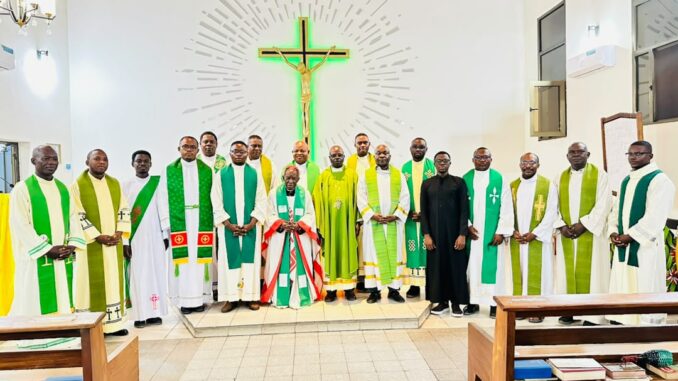
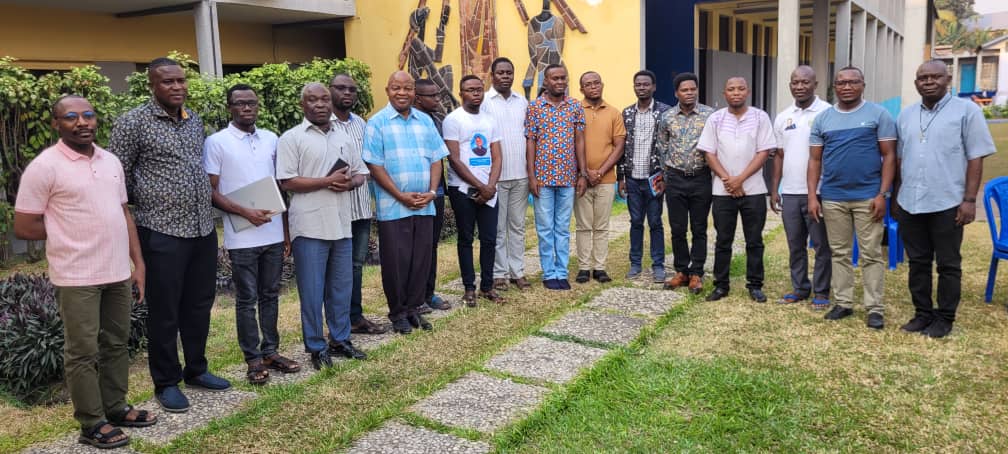
About fifteen young Missionary Oblate priests met in formation from July 15 to 17 at the scholasticate Saint Eugene de Mazenod in Kinshasa on the theme: « Digital communication for communion and mission ». In the light of the Holy Scriptures and the teaching of the Church, they shared their experiences in the digital world. Following a method of discernment, participants looked for ways to ensure a better numerical pastoral presence to gain to Christ new « followers », disciples.
Lessons from the Magisterium towards a Total Presence
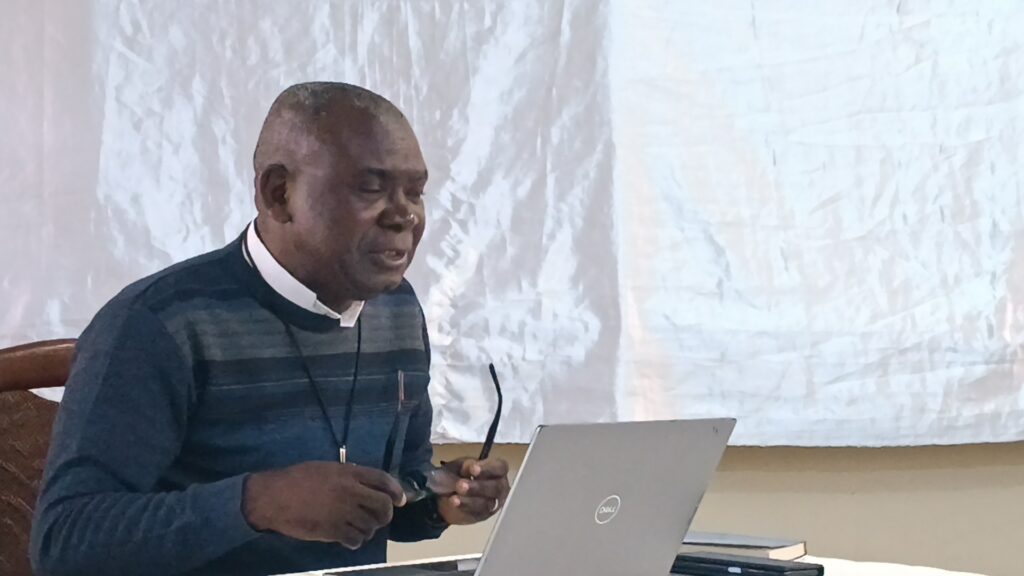
The session, moderated by Father Jean-Baptiste Malenge, was opened on Wednesday 15 July by the provincial vicar, Father Guillaume Muthunda.Venus de Luanda in Angola and nine dioceses, 8 provinces of the DRC, They have shared their experiences in the digital world, and using the teaching of the Church, the religious Oblates of Mary Immaculate seek to live communion and fraternity beyond distances and origins. Today, they seek to better share news from their communities and to live the evangelizing mission by marking their presence on digital highways. The training session intended as pastoral discernment renewed their zeal for « dare great as the world » Not to mention personal development.
The first encyclical of Pope Leo XIV Magnifica humanitas on artificial intelligence published on May 25 directed the young Oblate priests to consider the fact that modern technology must first respect the dignity of the human person. The Oblates found there principles of the Church's social teaching such as the common good, the universal destination of the goods of creation, solidarity and subsidiarity. Religious find themselves strengthened in their charism as missionaries of the poor with multiple faces.
A second document of Pope Leo XIV is his Message entitled « Preserving human voices and faces »published on January 24 for the 60th World Day for Social Communications. The young Oblate priests retained above all the call of the Holy Father to literacy to the media. In DRC and Angola, Oblates are engaged in teaching, from primary to university. Since young people, both urban and rural, meet easily in social networks, missionaries commit themselves to accompany them by training them in critical spirit in order to preserve humanity in the truth in the face of fake news, misinformation or dependence.
Another major document of the Holy See is entitled « Towards a total presence. Pastoral reflection on engagement on social networks ». The document was published in 2023 by the Dicastery for Communication. The young Oblate priests first took lessons for their own permanent formation. They urged themselves to become, more than successful influencers, creators of content as digital missionaries, who know how to think « slow, deep and focused ». They are opposed to the current superficiality in digital culture. But these young pastors realize that this content to be created must be above all religious in order to contribute with their specificity in an over-informed world. Catechesis is too often a problem or defect, the doctrine of faith is easily ignored in the digital environment. The priests, trained to speak of religious doctrine, would feel guilty if they deprived humanity of this specificity. Politics, sport and music are the most discussed topics in social networks in DRC and Angola, but young priests have faith and religion as specific content to transmit, to promote in order to gain to Christ new ones. « subscribers ».
Winning New Jesus « followers »
While so many religious sects impose and sometimes tear away faithful to the Catholic Church, the young Oblate priests of Mary Immaculate, without proselytism, will try to win to Christ new disciples in the digital culture. Young people, in particular, will be targeted by the young pastors, witnesses and bearers of the Good News of the resurrection, inspired in particular by the account of the disciples of Emmaus.
The Holy Scriptures remain the point of finding Christ in the Church to be born and to grow and enlarge. The disciples of Emmaus, witnesses of the encounter with the risen Christ, reveal themselves as models to be followed by the young Missionary priests of Mary Immaculate, aiming to meet Christ in her own heart, to speak and to discuss him in encounters on the paths of life, on the digital routes frequented by young people throughout the world. Young Oblate missionary priests will share the life of faith around the Word of Christ that precedes them and sometimes treat them as a stranger, an unknown, before sharing the Eucharistic table and other sacraments.
Let digital highways carry signs, voices and faces of Christ. The young Congolese Oblate priests commit themselves to ensuring with all their heart and in all their works.
Evangelizing the digital world
The 13 Oblates have become priests for up to 5 years and for a week for the last 4, ordained on July 11th 2026 in the Cathedral of Notre-Dame du Congo in Kinshasa. Cardinal Fridolin Ambongo invited them to live communion with God, with the bishops, among the priests and with the people of God. He also warned them about the misuse of social networks. And in an apostolic exhortation addressed in February 2026 to the consecrated people of the DRC, the Plenary Assembly of the National Episcopal Conference of the Congo (Cenco) noted « inadequate use of social networks » among the challenges of consecrated life in the DRC.
In their pastoral and ecclesial practice, young Oblate priests will be vigilant. But they will rely on social networks as well as on traditional channels of communication, which sometimes remain the only ones available in the peripheries, poor environments that the Oblates serve as a priority. The sons of Saint Eugene de Mazenod say « difficult missions », as acknowledged in 1826 Pope Leo XII, who approved the Constitutions and Rules of the young congregation born in France in 1816.
In 2031, the Missionary Oblates of Mary Immaculate will celebrate the centenary of their presence in the DRC, former Congo-Belgian. Digital technology already facilitates the constitution and restitution of the memory of missionary history. As they opened schools in their missionary history in the DRC, they were also pioneers in the digital age in some regions by helping to install the first mobile telephone antenna or even satellite for the internet.
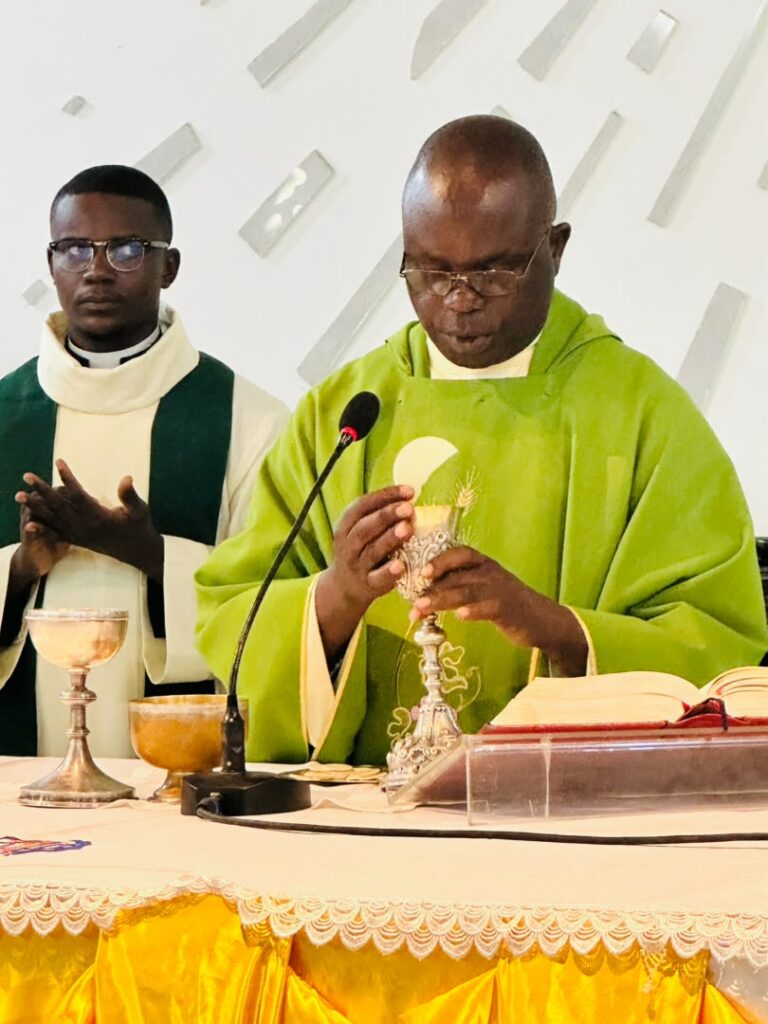
At the closing Mass of the formation session on Friday, July 17, the provincial superior, Father Constant Kienge-Kienge, reminded his colleagues of the charism of their founder who asked his sons to live among them charity and to deploy apostolic zeal outside. Digital communication is thus a wonder and a grace for them.


Be the first to comment